Ethiopia Sidama Highlands
Rising majestically in the Great Rift Valley, Sidama encompasses some of Africa's highest coffee growing elevations, stretching up to 2,250 meters. Smallholders farm garden plots surrounded by old-growth forest, harvesting wild heirloom mutations that have evolved in these highlands for millennia.
Sensory Cupping Profile
Wild blueberry, dark blackberry, lavender perfume, clover honey, velvety cacao nib finish
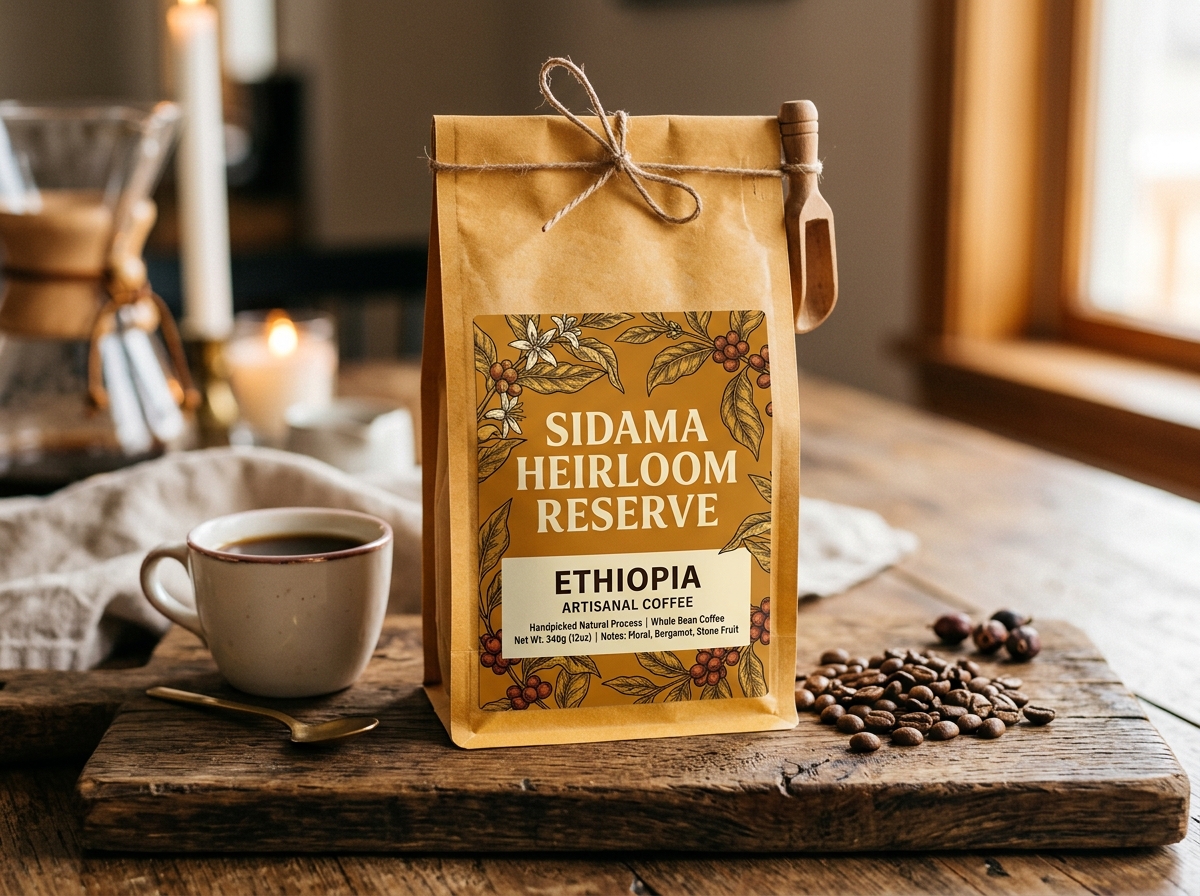
Geographical & Climate Matrix
Indigenous Varietals & Genetics
Cultivars native to and thriving in the microclimates of Ethiopia Sidama Highlands:
Photosynthesis & Sugar Maturation
Extreme altitude and cool alpine nights retard fruit respiration, concentrating monosaccharides and anthocyanins in the coffee cherry. When dried naturally on raised African bamboo beds with meticulous hand-turning, these sugars impart intense blueberry and honey notes characteristic of authentic Sidama naturals.
Harvest Cycle
Main Crop: November – January; Export Window: April – August
Primary Processing Methods
Raised African bamboo beds natural sun-drying (18–24 days); Slow underwater washed fermentation
Partner Roasters Sourcing From Ethiopia Sidama Highlands
Experience authentic single-origin micro-lots roasted by master artisans at local cafe counter prices with 0% markup.
Direct Trade Organic
Aleta Wondo Farm Collective
Sun-dried on raised bamboo beds by independent smallholders in Sidama. Explosive berry aromatics that perfume ...