Costa Rica Tarrazú Valley & Los Santos
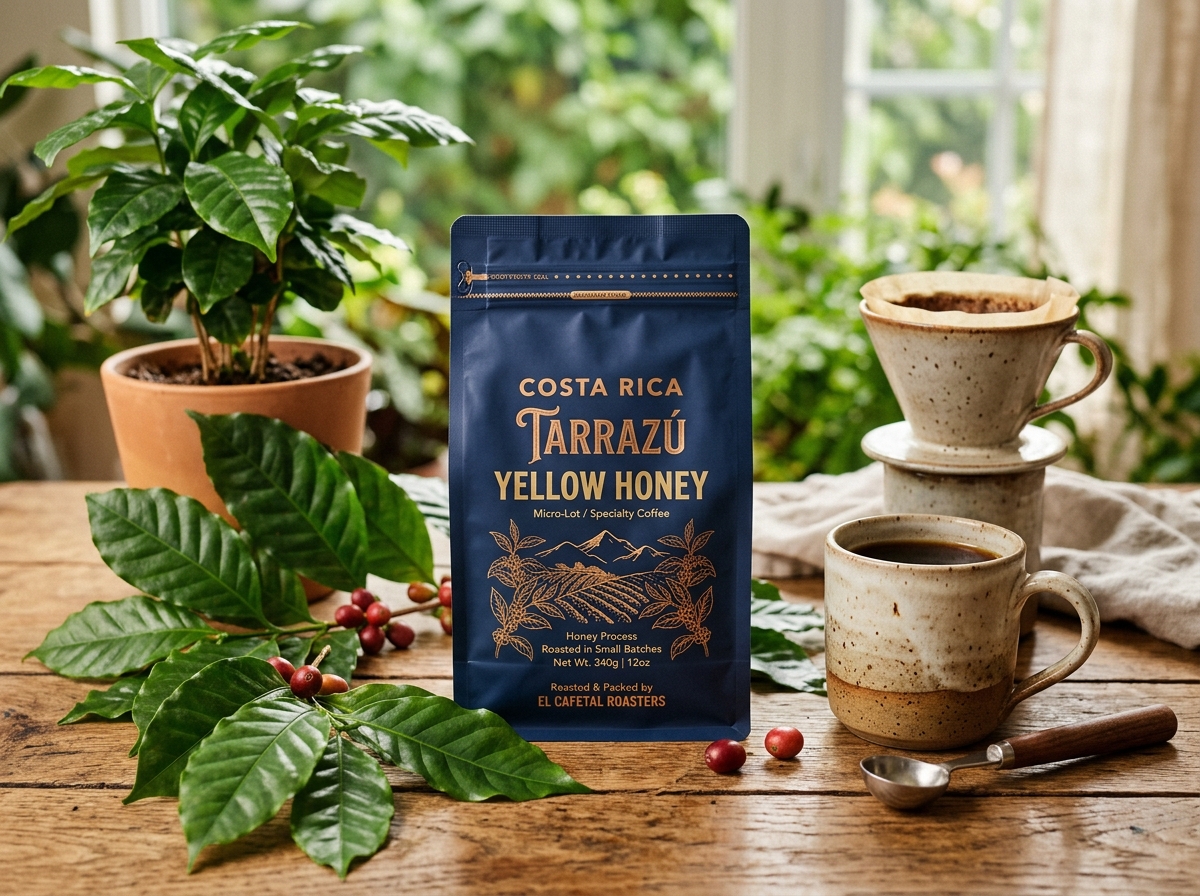
Tucked inside Costa Rica's Talamanca Mountain range, the Los Santos region of Tarrazú is world-renowned for its micro-mill revolution. Pioneer smallholders process their own single-estate harvests using eco-pulpers and sun-tables, producing world-class honey-processed coffees with radiant sweetness.
Sensory Cupping Profile
Ripe apricot, golden caramel, almond butter, crisp green apple acidity, vanilla bean finish
Geographical & Climate Matrix
Indigenous Varietals & Genetics
Cultivars native to and thriving in the microclimates of Costa Rica Tarrazú Valley & Los Santos:
Photosynthesis & Sugar Maturation
Tarrazú's climate features a distinct dry season that coincides precisely with cherry harvest, ensuring flawless sun-drying of honey-processed lots. Volcanic soil rich in potassium balances sweet sucrose creation with clean, crisp malic acidity.
Harvest Cycle
Main Crop: December – March; Export Window: March – June
Primary Processing Methods
Yellow, Red, and Black Honey micro-mill processing with partial mucilage sun-drying
Partner Roasters Sourcing From Costa Rica Tarrazú Valley & Los Santos
Experience authentic single-origin micro-lots roasted by master artisans at local cafe counter prices with 0% markup.
Rainforest Alliance Certified
El Cafetal Micro-Mill
Processed with partial mucilage intact on sun-tables, producing remarkable sweetness, balanced malic acidity, ...